
Decide what should be automated
Most of what people want automated shouldn't be, and the thing quietly eating six hours a week never gets mentioned. Working that out is the first hour.
AI integration specialist · North Port, Florida
You asked ChatGPT to do the job. It gave you a to-do list, argued about it, and forgot half of what you told it. That isn't you being bad at AI — it's what these tools do without someone driving them. I'm the person who makes them do the work instead.
The guarantee
Not "satisfaction guaranteed." A date. We agree a start day, and if it isn't live and doing its job 14 days later, you owe nothing and keep whatever I built. You've already watched AI waste your time once. This is how that becomes my problem instead of yours.
You've already tried this
You opened ChatGPT with something real. Not a poem — an actual job. And then:
So you stopped, and concluded AI isn't ready yet. It's a fair conclusion from the evidence. It's also wrong — and that gap is what I do for a living.
What I actually do
A chat window is not an integration. Getting AI to finish a real job, unsupervised, inside a business that already has its own systems — that's a specific skill, and it's the whole job.
Most of what people want automated shouldn't be, and the thing quietly eating six hours a week never gets mentioned. Working that out is the first hour.
The difference between AI that works and AI that wanders is how tightly the job is specified. This is the part nobody enjoys, and the part that decides the outcome.
Your calendar, inbox, spreadsheets, CRM, phone, whatever you already run on. AI that can't reach your real data can only ever give you advice.
It will get things wrong. Something has to notice before your customer does. That means limits, validation, and a human approval point on anything that matters.
Not one happy-path demo. Dozens of runs, including the awkward ones, until it behaves the same way every time.
It will drift. An app will change under it. You'll reprompt it one day and stop it working. That's normal, and it's what a support plan is for.
How we'd work together
The first project is deliberately small — one job, done properly, so you can see whether this actually works before committing to anything. Most people then keep me on a monthly retainer, because the second and third things are always easier than the first.
You're not buying software. You're getting the person who knows how to make it behave.
"Like what?"
The builds people ask for most, and the ones worth knowing about right now. These are examples, not a menu — and not case studies, because I'm new and won't pretend otherwise. Your version will be specific to your business.
Pricing
I publish prices because hiding them wastes both our time. If your job is bigger than these numbers, you'll hear it on the first call, not at the proposal stage.
One job, scoped and quoted up front, fixed price. Most first projects land between $750 and $3,500 depending on how many systems have to talk to each other. Live in 14 days or you don't pay.
Thirty days of fixes are included after go-live, whatever you decide about support. Work too big to quote off a phone call gets a paid half-day to map it properly, credited against the build if you go ahead.
Step two: support, once it's live and you've seen it work
One live automation. Someone to call when it misbehaves.
Up to 3 live automations. $200 each instead of $250.
Up to 8 live automations. $150 each.
Who you get
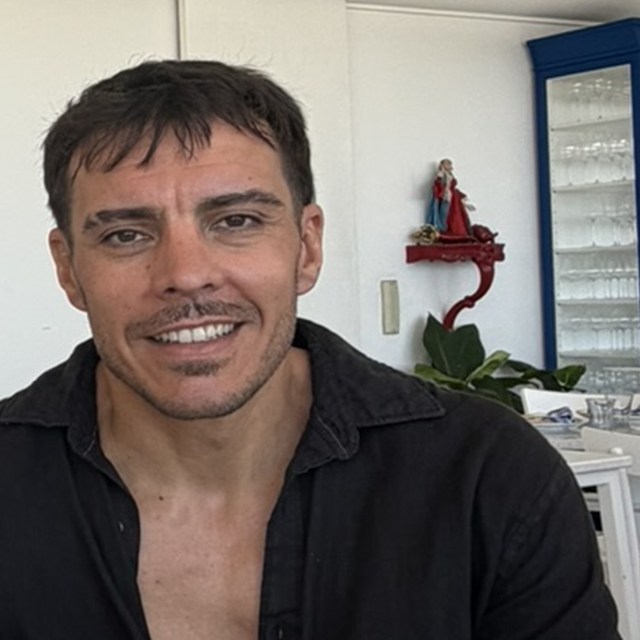
I'm Oleg Boyarkin. I work with these tools every day, which mostly means I've already had the argument with them that you'd otherwise be having. I know where they quit, where they lie, and what it takes to get a job out of them reliably.
I do the work myself — so the person who scopes your job is the person who builds it and the person who picks up when it misbehaves. That's also the honest limit: three new builds a month. If I'm full, I'll tell you when I'm free rather than start something I can't finish in 14 days.
941-258-7657 Call or text. It comes to me.
AI agents for small business
Straight answers to what people ask before hiring someone. Written by Oleg Boyarkin, who does this work in North Port, Florida.
Hire a specialist to set one up properly rather than buying another tool. The hard part isn't picking software — it's making AI do a job reliably without someone checking it. Gulf Coast AI Automation does this for businesses in North Port and Southwest Florida, starting at a fixed $750 for the first project, live in 14 days or you don't pay.
Because a chat window isn't an integration. On its own, a general AI assistant will hedge, ask you questions back, do most of a task and leave the fiddly part, and forget context between sessions. Getting it to finish a real job unsupervised takes specific setup: clear instructions it can't drift from, access to your actual tools and data, checks that catch its mistakes, and a stopping point where a human approves anything that matters. That setup is the work.
An AI answering service picks up calls a business can't get to, asks what the caller needs, captures the details, and passes the job on — day or night. It's worth it when calls are actually being missed: Invoca's data puts unanswered calls to home services at 27%, and the MIT lead-response study found you're 21 times more likely to qualify a lead if you respond within five minutes rather than thirty. If your phone is always answered within a couple of rings, you don't need one.
Setting up a chatbot service that answers from your real prices, hours, and policies is usually a $750 to $3,500 build depending on how much it needs to know and where the enquiries have to end up. Running costs are $20 to $250 a month, billed to you by the platforms at cost. Off-the-shelf website chatbots are cheaper and mostly disappoint, because nobody teaches them the specifics of your business — which is the entire job.
Someone who connects AI to the systems a business already runs on and makes it perform a defined job end to end. It's different from buying an AI product, which does one fixed thing, and different from using a chatbot, which answers questions but doesn't take action. The specialist's job is the part in between: deciding what should be automated, constraining the AI so it behaves, and staying responsible for it afterwards.
The build is a fixed price from $750, quoted up front after a free 20-minute call. Most first projects land between $750 and $3,500 depending on how many systems are involved. Once it's live, support is priced by how many automations it covers — $250 a month for one, $600 for up to three, $1,200 for up to eight — month to month, cancel any time.
| What | Price | Timing |
|---|---|---|
| First project (the build) | From $750, fixed | Live in 14 days |
| Support, 1 automation | $250/month | Cancel any time |
| Support, up to 3 | $600/month | Cancel any time |
| Support, up to 8 | $1,200/month | Cancel any time |
| Software & AI usage | $20–$250/month, at cost | Billed by the platforms |
OpenClaw is a free, open-source AI agent that runs on hardware you own and takes instructions through ordinary messaging apps like WhatsApp, Telegram, Signal, and Discord. It was built by Austrian developer Peter Steinberger, first released on 24 November 2025, and renamed to OpenClaw on 30 January 2026. It's MIT-licensed and, as of March 2026, had roughly 247,000 GitHub stars.
It can handle repeated computer work — checking a portal, pulling records, preparing a document — driven from a chat thread you already use. It's genuinely powerful and genuinely fiddly to set up safely, which is the usual reason someone else does it.
No. Anything that spends money, changes a record, or reaches a customer stops and waits for a person to approve it. You see the instructions before it goes live, and everything it does is logged where you can read it.
North Port, Venice, Port Charlotte, Englewood, Punta Gorda, and Sarasota County are the home patch, and local clients can have someone turn up in person. The work itself is done remotely, so businesses anywhere in Florida and beyond are fine. Call 941-258-7657.
Get started
This builds a text message you can send. Nothing goes anywhere until you press send, and you'll see exactly what it says first.
North Port, FL
North Port, Venice, Port Charlotte, Englewood, Punta Gorda and Sarasota County are the home patch. The work is done remotely, so anywhere else in Florida is fine too.
If AI can't fix it, you'll hear that on the call and you've lost 20 minutes.
FAQ
You can, and you already tried. It gave you homework. The difference isn't access to the tool — you have the same one I do — it's knowing how to pin a job down so it gets finished the same way every time, and wiring it into the systems you actually run on.
Think of it as tech support for something that's now running your business. AI drifts off task. Apps change their APIs. Models get swapped underneath you. And honestly, the most common one: someone goes in, reprompts it to do something slightly different, and the working automation stops working. That's not a criticism — it's what happens with a tool you can talk to. The plan is for someone to pick up the phone when it does.
Covered, up to three times a month on any plan. You should be able to poke at your own system without worrying you've just broken something you'll be charged to fix. Beyond that, or if it needs rebuilding from scratch, you'll get a quote first.
No. Thirty days of fixes come with every build regardless. After that it's month to month, cancel any time, no notice period. I'm not going to ask you to commit to a year on something you haven't watched work yet. If you do want to prepay twelve months, you get two free.
If it isn't live and doing its job within 14 days of the agreed start, you don't pay. That's a delivery promise, not a results promise — I can't guarantee how many jobs you'll book. But I control how fast I build, so I'll put money on that.
No. Most businesses I talk to are short-staffed, not overstaffed. What gets automated is the work nobody wanted: the retyping, the chasing, the thing that only happens when someone remembers.
Usually not. I connect what you already have wherever it's possible. If something genuinely can't connect, you'll hear that before you pay, not after.
About 45 minutes total for a first project — a 20-minute call at the start, and a short review before it goes live. If a project needs more of your time than that, I've scoped it wrong.
Three builds a month